Here’s something worth considering as we prepare to elect our school board trustees in London.

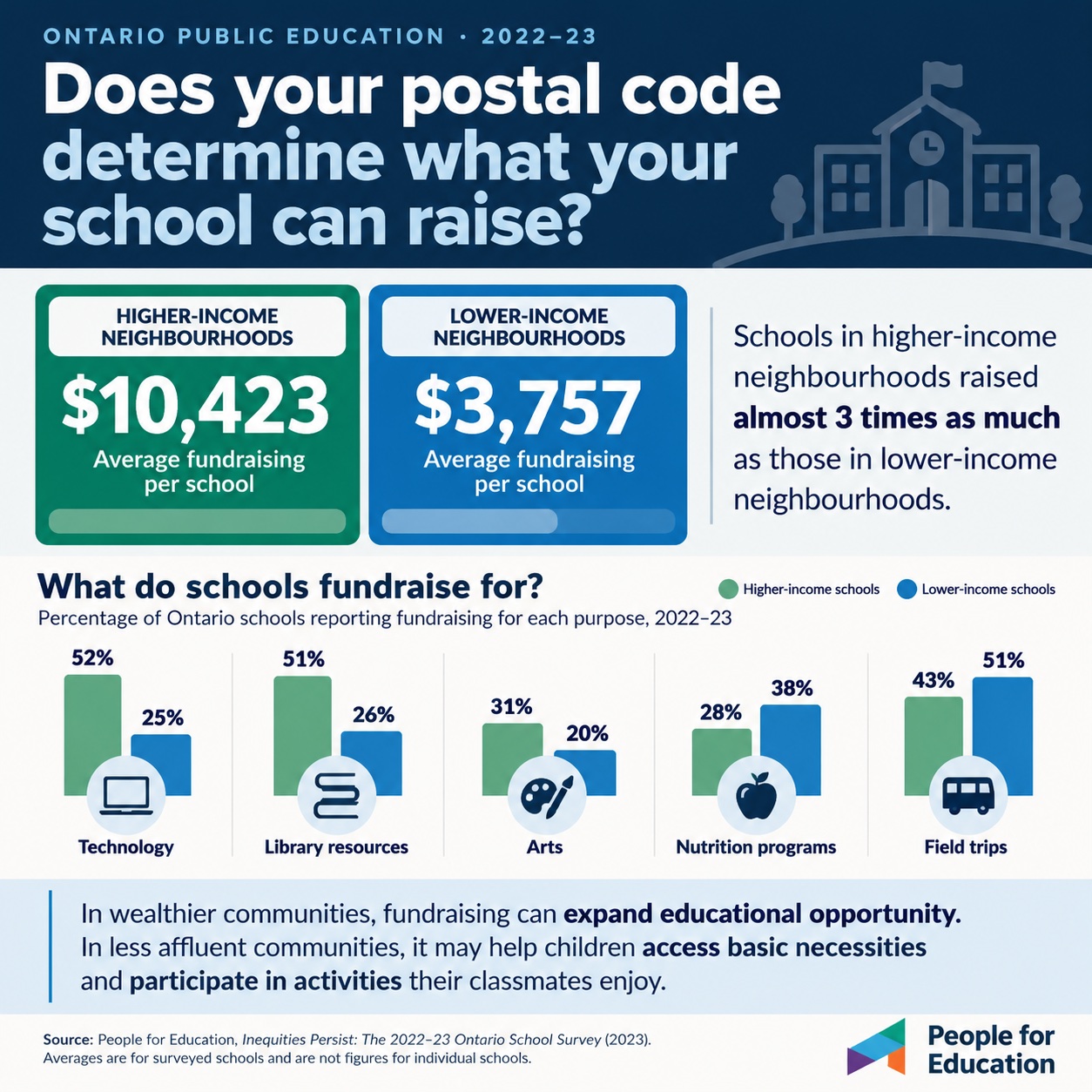
According to People for Education’s research, Ontario schools in higher-income neighbourhoods raised an average of $10,423 in 2022–23.

Schools in lower-income neighbourhoods raised just $3,757.

Almost three times the difference.

But here’s what concerns me even more: 

Schools in wealthier communities were more likely to fundraise for technology, libraries and arts programming.

Schools in less affluent communities were more likely to fundraise for nutrition programs and field trips.

Think about that.

In one community, fundraising can expand educational opportunity. In another, it may help children access basic necessities and participate in activities their classmates enjoy.

And then there are the teachers.

I regularly hear from educators who purchase food, hygiene products, clothing and classroom supplies with their own money. Sometimes they even help families struggling to make ends meet.

Their generosity is extraordinary. But should our public education system depend on it?

We celebrate the principle that every child deserves an equitable education. Yet the resources available to children can still be influenced by neighbourhood wealth, charitable donations and the personal generosity of educators.

This raises important questions for anyone seeking election as a school board trustee:

  • How does your board identify and measure inequities between schools?
  • How are resources allocated to address those differences?
  • Should essential educational opportunities depend on fundraising?
  • What can trustees do to ensure that students’ needs are met, regardless of family income or postal code?

School trustees cannot solve poverty or determine provincial education funding on their own. But they do have important responsibilities for oversight, local priorities and public accountability.

Education is one of our greatest public investments. Equity should be something we can demonstrate, not simply something we promise.

I’m exploring these questions in my London School Trustee Election Primer.

Sources: People for Education, Inequities Persist (2023) and The Education Promise and Critical Resources in Canadian Schools (2026).

#LondonOntario #SchoolTrustees #PublicEducation #EducationEquity #OntarioEducation
Throughout history, opportunities for great education have been limited to the few. Public education was put into place in large part to feed commerce. It has served to prepare workers for the workforce. The workforce was needed to create things for companies owned by the elite, wealthy and powerful people in our societies. Those from wealthy families could afford to send their children to elite schools and have them graduate to positions of power in both industry and politics. Having wealth was often the ticket to both higher education and power. As demonstrated in recent times, students from wealthy families have paid extra money to institutions of higher education in order to guarantee entrance for their children to those institutions. Not only can this wealth guarantee entrance to these institutions, but it can also guarantee the marks needed for graduation.

How are we doing in Canada? Are all schools equal and access equitable? Let’s start with elementary schools and high schools.

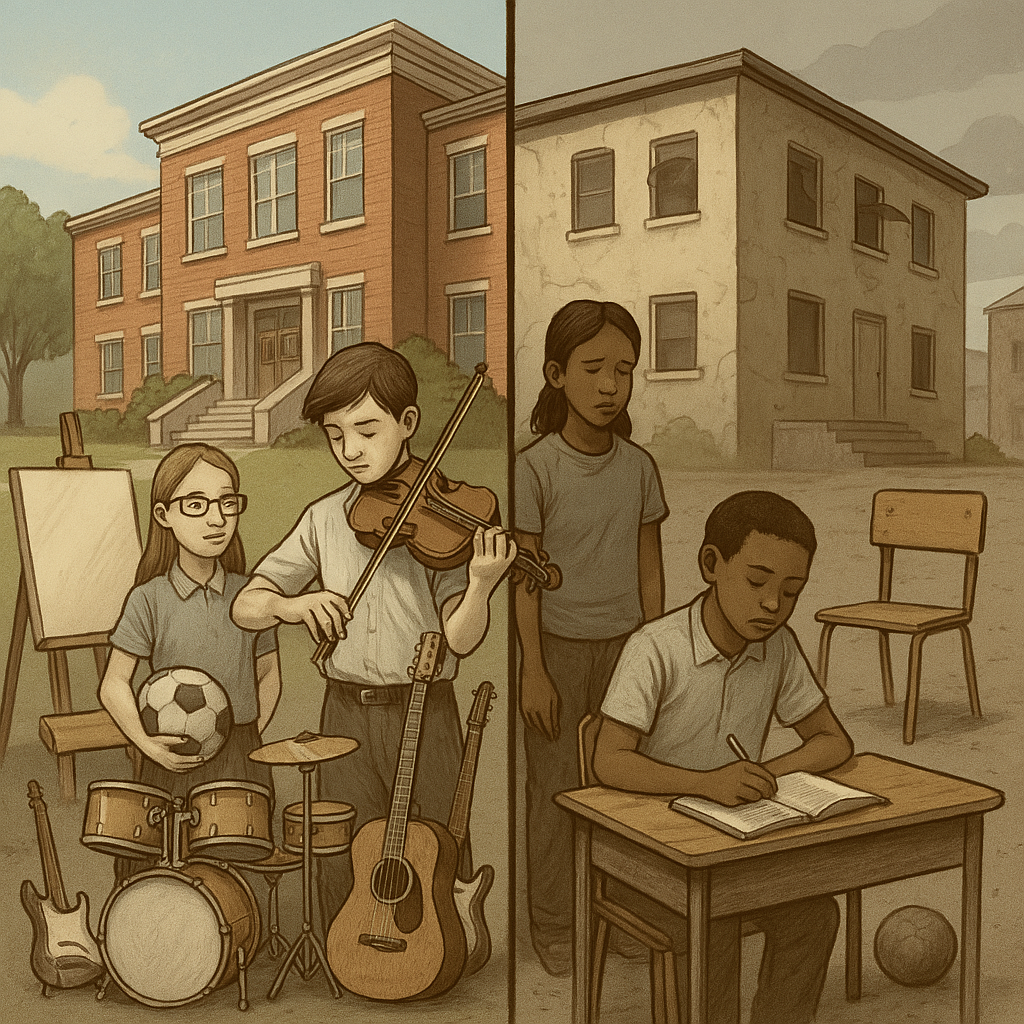
There are a growing number of schools that are marginalized by social-economic classes. These are the schools that don’t have parents who can fundraise for school trips or extra school equipment. These are the schools that don’t have enriched arts programs and have few if any afterschool extra-curricular activities. In Ontario, it’s up to the Principal of the school as to whether or not there are arts programs! No equity at all!!

Although the curriculum for all provinces in Canada includes the arts, if there is no arts specialist (such as music specialist) on staff, its up to the individual teacher how they will manage or not manage to teach music. In countries like Finland, Arts education is considered a human right and there are specialists in each school as well as 97 publicly funded music schools for an afterschool education opportunity. Of course there is also music in their public schools….each and every one. Teachers in Finland must have at least a Masters Degree to teach and it is a highly competitive profession where only about 10% of those who apply get the opportunity to teach. Music and Arts specialists exist in every school there.

Scientists at Standford and education specialists around the world have clearly stated that our future will rely on creative entrepreneurs. They will create the new economy and tackle our social and environmental challenges. Daniel Pink in his book “A Whole New Mind” makes creative education his thesis and the basis for his arguments about the type of economy that’s ahead of mankind. Manufacturing jobs will become scarce as automation and AI take over. Entrepreneurs who have been steeped in creative risk-taking and the skills needed will form a new economy based on invention.

Creativity comes in large part from the arts and not as much from STEM education. This is a supporting reason to include the arts as an essential part of our education curriculum and make that education happen! The fundamental reason for the inclusion of the arts in core curriculum is that it is equitable and good for us. It brings joy and fulfillment to our lives. Kids are often motivated to get out of bed and go to school for arts curriculum… more often than STEM curriculum.

Knowing that some families and children have access to an enriched education and other don’t, how do parents feel about this? The working class might not even notice as they are busy trying to hold their lives together. But when they do, I’m sure outrage and action is ahead. The United States is a great example of this. There are huge social-economic divides in the U.S. and there is a rising “us and them” political and cultural civil war happening as a result. Education equity is a huge factor creating this divide. This is not good for society or the economy. Let’s not let Canada slip further away, but act with awareness to ensure that we fight for equitable education for all Canadians! How? Start conversations about it. Talk to your teachers, school boards, family and governments and insist that what we are doing does not align with Canadian values. Protest and vote for the change. Change comes when you drag the politicians into it!

Ranking systems for education are extremely flawed and myopic. For example, the U.S. World and News report ranks Canada in the top five countries for education. But what does this mean? If you ask students about schooling in Canada, most will not be happy with the system. They often talk about short-term memory and forgetting everything after tests. They also are exasperated about the extensive and intensive testing including standardized tests. Most don’t see the point of the curriculum and delivery. Even teachers are fed-up with the system where they often feel they can’t be creative in their teaching. I’ve done hundreds of interviews with teachers and students to determine this conclusion. Perhaps you have your own stories.

A growing gap in enriched education is happening. Many schools don’t have arts or music programs. Some schools have everything. Often this is related to class and wealth gaps. Some school districts have public schools for the arts where a limited amount of students can attend by audition. So many are turned away. A good example of this is Pearson School for the Arts in London Ontario. Why should one school be an arts school and the rest not have that branding. Research is showing that every child will benefit greatly from an arts education and that it is fundamental to having the ability to create anything in life. Neuroscientists as Stanford and many other Universities have research to prove this.

We can’t go on measuring education by test scores. We must measure it by well-being and grit. How engaged are students in learning for the sake of the benefits to their lives? I’m not talking about the corporate job, I’m talking about building who we are as human beings (not human doings) and being able to flourish in our world. We need a moral reconning as a society! What values should we use when measuring education and our lives in general? In places like Finland (the happiest country in the world for the seventh year in a row), they focus on the well-being of the student. They don’t test in the first seven years of education as they trust their teachers to know how the students are doing and what they need to succeed. Education is also free to the PhD!

Education equity is one of the major footprints leading to our social ailments. People are slipping through the cracks and ending up on our streets in large part because of our education inequity. Let’s strive to correct this. At a time when we need to re-brand our country, let’s make education our number one investment!