I recently attended a conference in Berlin called “ClassicalNEXT” which tackled the issue of the future of classical music. It was very stimulating and filled with people from all over the globe. A real collective “think”.

I collaborated with a colleague from Finland hosting a roundtable discussion about innovation in music education including virtual tools and AI. Finland assesses music education and performance through peers more often than teachers.

As the world turns faster with the advancement of AI and its impact on everything, traditionalists have mixed reactions to this new tool and its implications. Some embrace it and see its potential for adding value to music and music education and others feel threatened by it and fear it will destroy traditions and steal ideas. One conclusion I heard from a presenter was that AI won’t take your job. People who know how to use AI will take your job. That was powerful and speaks to the task at hand: learn about it and how it might help you to be more efficient and get more ideas or….fall behind!

So what is the future of classical music in this new arena? One could ask about the relevance of all traditions in Arts and Humanities as AI dominates the conversation. I believe its future is strong and may be even stronger in the context of this new chapter in human development. The guidepost for these changes is always going to be about a moral compass. People can use technology for good and bad. We need to work hard to make sure that it is used for good. UNESCO has done a great job spelling out the ethical development of AI and I highly recommend visiting this resource. Here is a URL to that resource:

https://www.unesco.org/en/artificial-intelligence/recommendation-ethics

I ran a concert hall for over 20 years and have witnessed a lot concerning all of the music genres. From my perspective, there are a number of challenges to the future of classical music:

  1. Music Education: start young and establish the normality and appreciation for it. If a child picks up a violin now, they will likely support an orchestra later. They also did “that” and it becomes normalized and not privileged.
  2. Live music: get young people out to venues and establish a habit for going to them. Let them experience not only the music, but foster a sense of community and connectivity throughout the time they are there.
  3. Elitism: provide opportunities for classical music to be performed throughout communities and make it affordable or free.
  4. Musicians: don’t just show up and play and then disappear. Go out into the audiences whenever possible (before the concert, intermission and afterwards) and cultivate ongoing relationships with them. Talk about life, meaning and the music itself. Take the focus away from the performance outcome and focus on the emotions and intent, reactions and questions.
  5. Technology and AI: Technology has been with classical music for quite some time now. With the introduction of every new possibility, there have been those that are in fear and look to the past, and those who get excited and look to the future. Cultivate curiosity and engage with innovation. Become masters of it and see what is useful. Lead the innovation and don’t let the industry around classical music be led by the industry of technology. Even offer to co-develop it.
  6. Embrace fusion and innovation in music composition: Try to keep an open mind. Everything was new at some point and listeners either resisted or embraced the novelty.
  7. Interpretation: as Chick Corea once said to me: “Classical Musicians take themselves too seriously”. Is it a bad performance if the ornament comes before the beat or on it? Was the tempo unorthodox? Was the articulation out of “style”. Does any of this really matter? Is someone going to die from this? Is quality going to suffer if someone doesn’t get it right? We get so wound up with the “truth” that we forget the creativity and experiential part of music making. Cut some slack and listen to different perspectives; highly schooled or not. Foster music making and perspectives. It will make the art former richer!
  8. Attention spans: as we know, they are limited for many these days. Talk about the pieces you are playing and guide the listener. Don’t make it a “lecture” recital, but an open dialogue for preface and reaction. Don’t be afraid to have a conversation with your audience.
  9. Formality: let them clap where they like. Get used to it. Jazz musicians did and do. Lots can happen in a theatre. Young people can make noises at inappropriate times, someone could cough or sneeze, someone might need to get up at an inappropriate time and leave. Don’t glare and make them feel unwelcome. Try to find ways to foster a collaborative audience experience that includes real humans together and not the unrealistic expectations of silence. I’m sure everyone has their disruptive moment during a performance!
  10. The Genre: Classical Music is just music. It’s not until society tells the uninitiated that it is something else that it gets its elitist reputation. I ran a free afterschool music program “El Sistema Aeolian” for 14 years. We once took the kids to perform and interact with a budding group of Elementary Teachers at Teachers College, Western University. One of the teachers in training asked: what do you do with the prejudice against classical music. I responded: “Thanks a lot; they haven’t learned that yet!”
  11. Recordings versus Live: one isn’t better than the other. If a listener enjoys listening to recordings, it isn’t wrong. You shouldn’t tell them they are missing something. Invite them to a live concert and let them make up their own minds about the ways they want to enjoy music.
  12. Advocacy: there is growing research to show that the study of music and especially classical music helps with cognition and develops many skills that benefit people throughout their lives.. It’s not the authentic reason to study music, but a side benefit. Learning and playing classical music is about the joy factor!

These are a few ideas I have about the future of classical music. I would love to hear your perspective; traditionalist or not!

Sheldon Kopp’s book with this title is definitely worth the read. The title actually comes from the 9th century Chinese Buddhist monk Linji Yixuan. I read it about twenty or more years ago and it was definitely food for the soul. The thesis in this title proposes rejecting external authority and dogma and instead trusting in your own experience and understanding.

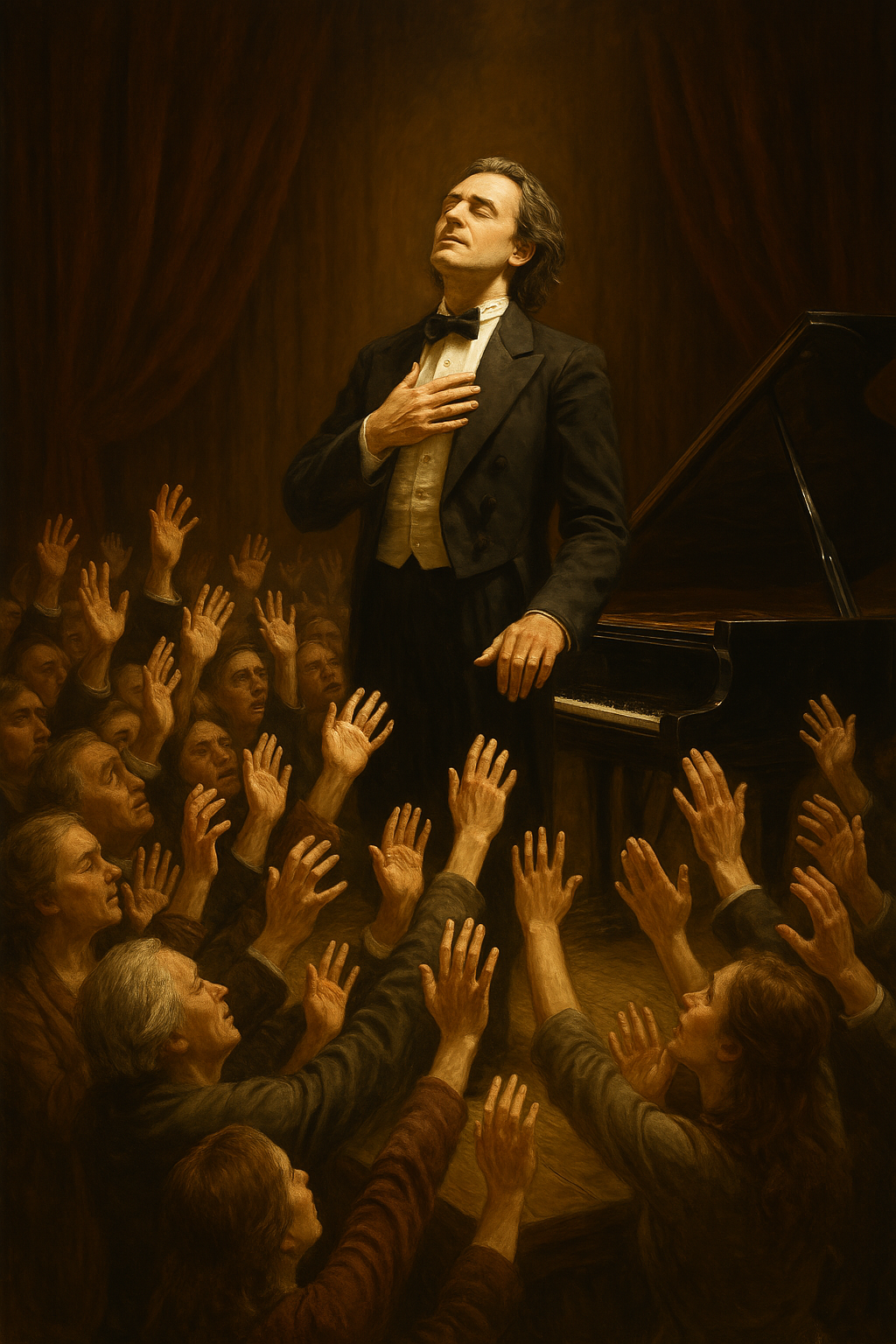
In our culture here in the western world, we’ve largely moved away from the worship of an external god. Yes, many still believe and follow religions, but the worship has become more overtly directed at humans. A great example of this is the “Rock Star” of professions like sports, entertainment (actors), leaders and those who obtain large amounts of wealth. We want to follow them, be like them and think about them often when reflecting on our own lives. We also pay a lot of money to hear and see them. We talk about them incessantly and idolize their lives and achievements.

Having been steeped in the classical traditions of piano playing, those “Buddhas” are the composers, the great interpreters/performers, the great teachers that we bow down to. They are like gods to many. We worship the way they play or write music. Of course, great wealth and cult followings envelop these personalities. Historically, one can find concert halls filled with the “who’s who” in the audience: the worshipers. Sometimes the worshipers aren’t even interested in the art form/performance, they are just interested in being part of an experience where they can be seen as appreciating the “greatness” as presented. Even if it isn’t greatness, sometime worshipers follow because others do, wanting to be part of the crowd; sheep following the shepherd. It’s a bit twisted, don’t you think? These perceived giants are just people like everyone else struggling with their own lives. I’m not diminishing the authentic experience of listening to great music and being brought to tears, but how often do you see classical audiences react in authentic ways to the performance. Traditionally, it’s sit still, don’t move, and be quiet for fear you bother someone. It can even be about building Cultural Capital; connections through classical music to be exploited for other purposes.

I remember when the great musician/pianist Chick Corea came to perform at Aeolian Hall for the first time (28 Grammy Awards) and we had dinner together. Chick loved classical music, but he made a statement to me that I’ll never forget:

“Classical musicians take themselves too seriously”.

I asked him to explain this and he reflected on his own journey with classical music (incidentally, this was his greatest passion) and the culture he experienced.

He lamented the inauthentic pursuit of the best performance, the closest adherence to the written text and the elusive “truth” of the very best musician or interpreter of a work. Don’t you dare change a single note or detail the composer has written. It is a sacred text to be venerated and worshipped.

Then there are the composers. Throughout my career I get asked questions like: “who’s your favourite composer….pianist….work of music etc.” “What was the very best performance you ever attended?” Not a lot of talk about how the music or how performance affected your spirit. Authenticity is often completely lost here! It seems like it’s more like “collecting and possessing” than “experiencing and reflecting”. “Oh, that performance in Berlin that I attended of Turandot was certainly rated as the best ever presented…and I was there!” Aren’t I great and special?”

Then there’s the competitions. So many of them now and so many winners. Before international competitions, artists were recommended by their peers for their capabilities and artistry. Now it’s the olympics for the arts. Having art as a competition is antithetical to the creative process.

I worked for years with the great French pianist Cécile Ousset. She sat on the juries of many of the big competitions and had participated in competitions in her youth. I asked her how a decision was made to choose winners. She said: “we choose someone with a lot of experience”. I then asked her: “Why don’t we make competitions for older players who have lots of experience”. She said: “That’s a great idea”.

Completely messed up, right?

I also asked Mme Ousset if the jury ever heard much interesting playing. She said: “no, rarely”. Often Competitions make artists choose winning interpretations rather than their own authentic ones. Playing something in a way that pleases the most or working on technical perfection over spontaneous risk taking.

I hope society can find space for arts for “arts sake”. The creative process as being one of truly “living and experiencing” rather than worshipping and winning. We will all grow immensely and find our creative outlets if we return to building who we are with great authenticity.

There are boundless books, videos, courses and more about how to practice music. How can we choose a way that works for us personally? Or is there just one way we should all practice?

The old school teacher would often have one approach that was mandated for the student. Often, no questions asked. In other words, let’s fill the empty vessel! This was passed on through the hundreds of years and thought of as a legacy. “I’m from the Viennese School” of piano playing” or “I have been taught the true bel canto approach to singing”. Better still, “I’m from the Anton Rubinstein lineage of piano playing” or in more recent years, “I’m an Alexander Technique practitioner. Disciples of hundreds, if not thousands of “schools” or “lineages” still abound!

If you’ve had a teacher, you’ve probably been told to practice at home. The really old-school way is basically just that: practice….and a lot! It’s a bit limiting and doesn’t help if you get stuck or aren’t sure how to break down practice projects and goals. It was all about hours spent and not necessarily well spent.

There is a saying: “Practice makes Perfect”. It’s actually quite a lie. Only perfect practice makes perfect. “Practice makes permanent” is closer to the truth. If you practice something the wrong way, it stays stuck in those neural-pathways. One has to work a lot harder to undo those bad connections and re-wire the brain with a good connection.

So now, down to the plan. First off, stay open. Don’t get a fixed mindset about how you go about learning. As lots of questions both to yourself and to your guides. See what works for you. Give things time. Something might not seem reasonable now but with lots of practice might seem great later.

Listen and watch great musicians. Not just the ones playing your chosen instrument. Learn a lot of music. I mean thousands of pieces of music. A musician is one who knows music. An instrument player like a “pianist” or “singer” knows how to play, but doesn’t necessarily know music or have great musicianship skills.

Motivation is not the tool that makes for great practice. Some days we are motivated and others we are not! Habits are the key; things we do daily like brushing our teeth-whether we like to or not! There is a great book I recommend to my students for habit formations: Atomic Habits by James Clear. The saying: “showing up is half the battle” rings true!

Getting organized for your practice with lists of goals and time units is also fundamental. There are many books and apps that can help structure good lists. A few I recommend are: The Checklist Manifesto by Atul Gawande, Keep it Going by Austin Kleon and The 5 Types of Wealth by Sahil Bloom (this is really fantastic for much more than organizing priorities for lists!). An online app like Todoist is also extremely practical. A practice journal at your instruments side is also helpful for jotting down accomplishments as well as goal setting for each practice session.

Being well rested, without distractions and excited to learn is critical to foundations for good practice. Excitement and enthusiasm help carve out those neural-pathways, but carefully coached repetition is critical. We can’t always practice with a real coach at our side, so we have to become our own coach using critical thinking. Checklists help with this. Asking questions like:

How was my note accuracy?
How was my rhythmic accuracy?
How was my articulation?
How is my balance?
Am I voicing the right notes?
How’s my pedalling?
How’s the style?
Am I paying attention to rubato and other tempo signs?

The list goes on and on. Each repetition can focus on a different aspect, shifting our perspective and helping us know the notes better in different ways.

Malcolm Gladwell publish a book called “The Tipping Point” that discussed the 10,000 hours needed to mastery of something. Although his observations have had some controversy in recent years (exactly how long it takes), we know that years of practice are key to proficiency at the very least! Being psychologically ready to embrace this kind of longterm discipline is critical to success. In other words, having the patience to wait for an outcome and not just throw up your hands and say “it didn’t work for me” or “I really have no talent for it”.

Anders Ericcson wrote a book called “Peak” which is all about practice. I highly recommend reading and applying the principles in this work. Ericcson dispels the concept of the “prodigy” and instead looks at three things:

The goal
The coach
The practice

These are just a few thoughts about “How to practice”. It’s not a manual or a program, just concepts to put into practice. There’s no “Hack” for the work that needs to happen, nor is there any guarantee that some of the practice won’t be boring or tedious. There will be days when you don’t want to practice. We all feel this way sometimes. Those who succeed are the ones who practice anyway!

Happy Practicing!

I was speaking with a Finnish colleague recently about the relevance of what we both do for music and music education in the context of the current political and social turmoil. After some reflection, I thought I would write some thoughts on this subject: I’ve spent so much of my life journey as a musician and educator.

For fourteen years, I ran El Sistema Aeolian: a free, intensive afterschool music program I founded in 2011. The program is still running after my retirement and serves a community of youth and their families from diverse backgrounds. The majority of participants are either newcomers to our country or first generation. This group has two prevalent barriers to participation in regular paid programs: economic scarcity and lack of social fluency/social mobility. To be clear: they didn’t have money and they didn’t know many (or and in some cases any) people who could help them gain social wealth. This social wealth is the contacts they have that could help them succeed in the new Canadian Culture.

Recognizing the barriers to participation, I began to construct a social curriculum for this program. This curriculum included leadership, peer mentorship, social/emotional intelligence, self-awareness, self-actualization, well-being and much more. I ran a weekly leadership class that included regular visits from politicians, activists, clergy, non-profit leaders, business owners, artists, musicians and others. The goal of the leadership class was to increase the ability of participants to see the world more broadly and help them find their place in it. All this through the inspiration of music.

We took the participants on expeditions to perform in places like the University, Homless Shelters, Police Stations, City Hall and others. Through these experiences, the participants were exposed to people who treated them with appreciation and respect. The participants not only knew where the University was, but they had met people who were kind and respectful towards them. This gave many kids the idea that they might see themselves there someday. In some cases, family histories had no relatives that had ever attended a post-secondary institution. Over the years, I witnessed and assisted many participants into their post-secondary journeys into Universities and Colleges.

This is just one example of how the arts can transform people’s lives. We need to embrace the value of an arts education during these turbulent times as a steadying factor of optimism and self-development. Not only are the arts important, they are crucial to finding ways to help us all thrive in society. Let all artists and art educators remember this! Let the general public be aware and learn to see the arts as vital and life changing.

It’s so difficult to speak to audiences about the value of music education and music making. In Canadian culture and many others around the world, we start out with the added value of music outside of the value of music itself. We have to justify music making because research shows that it has the following benefits:

Improved physical health including eye-hand/body coordination
Improved emotional health
Improved cognitive health
Improved literacy
Increased social inclusion and cohesion
Calming the mind-body
Improved focus
Improved learning and retention

Of course, clinical trial studies are finding all of this to be true. Governments, educators and citizens will nod at this information, but still not put the resources in place to facilitate good music education. We think we’re making headway by spouting these facts, but they continue to fall on deaf ears. Music education is eroding in our country. It’s not considered by the powers-that-be as valuable as STEM subjects even though scientists are saying it’s at least equally important and some say more important!

We’re in a conundrum. Until everyone has the experience to learn and play music, it will be undervalued. If a child picks up a violin today, they will likely support an orchestra later in life. “I did that” is the most important element for engagement, understanding and equity of the value of a great music education. We can’t afford an “us and them” situation for any aspect of education. Just look south of our border and see what that leads to. We need equity in our education system with a rich, arts infused education including music! Our future depends on the creative entrepreneur who can help solve problems, create beauty and help us all experience the joy of living. The arts give that joy, but they also help us to create things like solutions to homelessness, solutions to our climate and ecological crisis, solutions to help us work together in peace on this planet.

I encourage everyone in our country to protest the inequities in our schools. Inequities that include the lack of strong music and arts education. Some schools have everything (orchestras, choirs, dance, drama, art classes), some schools have little to nothing. This is not the Canadian way.

If we do for one, we should do for all. When we do for all, our entire society will thrive!

We live in a time of technology and electronics. There are so many benefits to technological innovation and so many downsides as well. You probably have read a book in electronic format by now (or at least some part of one) and also read a traditional paper book. The digital text and screen is convenient and space saving. It might also be environmentally friendly (although there are debates about the ecological imprint of an electronic device, its manufacturing footprint on the environment and how often it needs to be replaced and recycled. There’s also the issue of the screen time and what this is doing to our bodies and minds. Real books save your eyes, don’t emit radiation and look great in a library:)

Enter the piano. Digital pianos abound. You can by the cheap partial keyboard piano online or in stores in many places. You could by a full keyboard/electronic piano at places like Costco fairly cheaply. You could also invest in cutting edge technology with a Yamaha digital piano (there are many different kinds including ones that have real actions in them).

When it comes to real pianos (I mean the acoustic kind made of wood, metal, real strings etc.), there are so many options. You can by some pretty cheap ones being produced in places like China (even Yamaha has entry level upright pianos and grands that are not great quality). You can also spend hundreds of thousands of dollars on brands like Bösendorfer or Fazioli.

How does one make a decision about the right piano for your personal needs? First off, quality is everything. Buy the best and the biggest (with acoustic upright and grand pianos) you can afford. Why? You could argue that “my son/daughter is just starting out, so we’re going to buy a less quality/expensive piano”. This is a fundamental mistake. Every note you play, how the keyboard feels and how the sound forms, sets the human response. If the sound is artificial (electronic sampling) and poor quality, there will be a huge negative impact on the human response to the music. If the strings are really short in length, they will not produce great sound. The longer the strings, the better the sound quality. That’s why there are such things as concert grands on stages of concert venues around the world. If you buy cheap, you are setting up the possibility of failed interest in music.

I’m a bit of a purist when it comes to electronic instruments. They are convenient for moving around and not needing tuning. You can also often sample many different types of sounds like harpsichord and organ. When in a pinch, I’ve practiced on these myself. I’ve even travelled with them when on tour, practicing in the hotel room with headphones on. If you buy one of these instruments, be sure to get the best quality you can afford: the sampling of sounds and keyboard weighting will sound and feel more like a real piano. These instruments are often very convenient if you live in an apartment. Yamaha has a technology that can be installed in acoustic pianos that allows one to switch from acoustic to digital, so you can have the best of both worlds. It’s called the Diskclavier.

Much of the music written since the late 18th century for keyboard was written for a real acoustic piano. I highly recommend the purchase of an acoustic instrument over top of the digital ones. The ability to blend/mix sound cannot be matched by an electronic piano. Like a real book, your body’s response to the sounds and music created by a real piano will be different than an electronic digital instrument. The piano is a a magnificent invention that so many composers loved and continue to love today. Do some research and find a wonderful acoustic instrument if you can make that work for you. The brands I recommend are Yamaha (high quality and stand up in multiple climate zones), Bösendorfer, Steinway, Fazioli (if you can afford one of these, I’ll be right over to play it for you!), Kawai, Bechstein, Schimmel, Steingraeber & Söhne, Grotrian-Steinweg, and Sauter. 

You can purchase a used piano, but remember, pianos are like cars, they don’t age that well. Don’t buy an old piano unless it’s been completely reconditioned with new hammers, new strings and other important replacements. Even with a complete makeover, the quality might not be that great as the sound board has likely lost its crown (this is the wood under the strings). Do some research and learn as much as you can about pianos before you buy one!


Classical music has a strong tradition of passing legacy for interpretation. Overtly, this includes teaching in a way that involves a fixed mind set. Teachers often present fingering, dynamics, tempos, voicing, emotional canvas through a lens that is inflexible. Most of us who play classical music come from this tradition, but it is slowly changing with each new generation.

It’s so important to realize that there are many truths. That’s not to say that there aren’t stylistic parameters to adhere to, but as Chick Corea once said to me: “Classical Musicians take themselves too seriously”, meaning that they are rigid in their view of the gods of music. The composer is like a god to many and what they have left behind is like the holy text that needs to be adhered to. This become quite a complicated mind-set when tackling composers like Chopin and Bach who left us variants in their musical texts, often including different notes, ornaments, pedal markings and many other details. How can there then be one truth.

This mind-set is further exacerbated by the “Conservatory” who puts metronome and interpretive markings where they never existed in the original texts. Conservatories also often produce recordings that set an expectation for interpretation. I actually have a friend who is a famous Canadian violinist who was asked to record an entire grade of music for a Conservatory. He’s super famous internationally as a great musician, but was told to adhere to the metronome markings the Conservatory had added to many of the pieces.

When we’re younger, we need models, so having clear instructions to imitate is a helpful framework to build a foundation. There also needs to be a clear pathway to encouraging students to interpret themselves so that they can become artists. Here’s hoping that the classical music lineage continues to promote some free expression so that everyone has the potential for artistry and not just imitation.

What does it mean to build musicianship?  Musicianship is the skills and experience you need to become a working musician.  This includes theoretical studies, training the ear (really the brain), understanding musical style, composition, literacy (reading), improvisation and much more.  

Our conservatory systems tend to focus on curriculum and examinations and push students and teachers to focus on outcomes like the examination success.  This often gets in the way of teaching and learning. Has a student had a good education if they play only a handful of pieces-mostly for exam preparations in an academic term (often one year of study).  Absolutely not!  Students should learn a vast array of works by different composers, time periods and styles.  

Students should also learn works that don’t necessarily resonate with them; in other words, they don’t like.  Why?  Would you ask an athlete if they like every exercise, they do that lead towards their goals?  There is part of every activity that is worthwhile that we don’t and won’t enjoy.  Learning something new can be both painful or perceived of as painful. Repetition building endurance; who likes that? Some do…you?  Speed increase until it seems impossible, and you can’t seem to break the barrier.  Memory work that seems to never be successful.  Interpretations that you are never satisfied. Grit, sweat: persistence is critical. 

Building musicianship includes going to concerts and listening to music of all genres.  If you are a pianist, listen to opera and symphonic work.  Embrace the complete works of a composer.  This will give you the edge to play the “one” you are trying to master. 

Listen to performance practice; find as many recordings as you can of great artists playing the work you are practicing.  Compare and steal ideas.  Yes, steal them!  All artists steal ideas and mix them up in new and unique ways. 

Learn and understand music history and composer’s biographies.  Listen to music of all styles even if you hate them.  

Most importantly, go out and live.  Great musicianship comes from a broad knowledge and experience of life.  Every composer has lives lived that have given them ideas and emotions to start their compositions.  You can’t learn to be a great musician in a practice room!

What does Urtext mean?

Definition from Collins Dictionary:

1. the earliest form of a text as established by linguistic scholars as a basis for variants in later texts still in existence. 

2. an edition of a musical score showing the composer’s intentions without later editorial interpolation.

The prefix “UR” means original or authentic and comes from German

We can actually talk about four types of music editions:

  1. Facsimile: a photographic reproduction of the composer’s or copyist’s manuscript or of a historical published version of a piece
  2. URTEXT: when a publisher engraves from a primary source of the music such as a facsimile; no alterations and easier to read, learn and perform
  3. Performance (Artist): a composition is presented in a manner that helps the performer learn, adding expressive features to a piece, simplifying notation and page turns, clarifying technical execution or making the music available at a lower cost.  Additions of dynamics, tempos, articulation and pedaling can make it difficult to see what the composer has written versus the artist.  High quality artist editions will identify what has been added to the score and what the original source material is.
  4. Critical: often referred to as scholarly, these editions analyze and compare sources and make suggestions based on extensive knowledge of the composer’s habits such as articulation, pedaling etc.  There are often extensive notes at the end of critical editions identifying sources.

What’s involved in making an URTEXT Edition of a musical score:

Hopefully, the best intentions for research and rigorous scholarship…but not necessarily.  Like the word “Organic”, this can be a “self-proclaimed” label and perhaps even a copy of another URTEXT without rigorous scholarship.  Some URTEXT editions pirate other editions and copy the work adding very little scholarship and perhaps even none.  

The best bet is to find out which publishers are doing good research.  Even then, new evidence can come to light to change the URTEXT like Chopin’s Op. 63, No. 2.  This Mazurka, said to have been penned on Chopin’s deathbed was extremely hard to deciphere.  The Henle Urtext only printed and transcribed the first couple of pages of what has become a much longer version in recent scholarship. 

Henle editions for piano works also add fingering.  Fingering can relate directly to interpretation by stressing notes, making them less legato, legato (articulation), dictating speeds (especially if there are a lot of finger substitutions) and even voicing.  Adding fingering (although it is mostly for the convenience of the student) is leaning more towards an artist’s edition and contradicts URTEXT status.  

Henle also publishes a Chopin Urtext that makes attempts like the Polish Edition to compare various editions and manuscripts.  In the end, they make choices that don’t include all of the possibilities of Chopin’s versions of his works.  When teaching, Chopin often gifted different new parts, ornaments, fingerings, pedaling and dynamics to his students.  Which one is correct then?  We can’t really ask Chopin; he might just say “all”.  

Chopin’s Op. 66, the Fantasie Impromptu in the Henle Urtext also doesn’t take into consideration the manuscript that used to be in the possession of Artur Rubinstein of what is perhaps a more finished version of the work.  It is currently published by Schirmer.  I once asked Janina Fialkowka, the great Chopin interpreter who studied with Rubinstein what version she uses.  She said she learned it when very young and doesn’t do the one the Rubinstein played from as it would be too much work to re-learn it!  

So, the journey for “truth” is elusive and subjective.

By comparison, what is an artist’s edition?

Artist editions can include recommendations for details not included in the URTEXT edition such as dynamics, speeds, moods, fingering and more.  Editions by great musicians like Busoni have a wealth of ideas for composers like Bach.  The Schnabel edition of Beethoven has many additional details and performance recommendations. The problem with an artist edition: it’s hard to decipher what was written by the composer and what was written by the editor if not clearly marked.

When I was a kid studying piano, I was told that Artist Editions are bad “Burn them”.  It was the impact of the URTEXT puritanical “I have the truth” way of doing things.  

I highly encourage students to explore many editions of a composers work if they exist.  Also listen to great artists play works and compare performance practice.  This process helps you to refine what you find authentic and craft your unique interpretation.