Throughout history, the relevance of Arts and Culture has been debated. If our current education system in Ontario is a beacon for the current views, then it is considered a superfluous commodity.
I’m in the process of reading Mark Carney’s book “Value(s): Building a Better World for All”. This was published in 2021, long before a conceived run for Canadian politics.
Firstly, the book is really erudite. It covers the history of economies in various cultures from the beginnings of recorded history. Even though it is a heavy read, I highly recommend it as a deep dive into where we’ve come from and where we are now concerning economic and social values. It also speaks to the changes we need to make to have an economy that serves everyone and not just the few greedy men.
How does this economist view art and culture?
Firstly, he believes that societal values extend beyond economic metrics. He believe that art and culture contribute to our collective well-being, identity and sense of community. Carney also believes that art and culture build social capital, empathy, shared experiences and foster trust and cooperation.
Concerning the value of art and culture during economic crises, Prime Minister Carney recognizes their roles in keeping mental health and social unity. Carney believes that we need to redefine value beyond monetary considerations that include human dignity and creativity alongside economic stability.
This is a leader who believes in a morally grounded economy with shared identity and non-material wealth. What a refreshing contrast to those who just want to lower taxes, cut services and have a “me first” society.
Canadians have a real choice to make. I hope we choose values that get to the core of who we are. Those values are rooted deeply in arts and culture. Values that have us build strong community, identity and social wealth.
I was speaking with a Finnish colleague recently about the relevance of what we both do for music and music education in the context of the current political and social turmoil. After some reflection, I thought I would write some thoughts on this subject: I’ve spent so much of my life journey as a musician and educator.
For fourteen years, I ran El Sistema Aeolian: a free, intensive afterschool music program I founded in 2011. The program is still running after my retirement and serves a community of youth and their families from diverse backgrounds. The majority of participants are either newcomers to our country or first generation. This group has two prevalent barriers to participation in regular paid programs: economic scarcity and lack of social fluency/social mobility. To be clear: they didn’t have money and they didn’t know many (or and in some cases any) people who could help them gain social wealth. This social wealth is the contacts they have that could help them succeed in the new Canadian Culture.
Recognizing the barriers to participation, I began to construct a social curriculum for this program. This curriculum included leadership, peer mentorship, social/emotional intelligence, self-awareness, self-actualization, well-being and much more. I ran a weekly leadership class that included regular visits from politicians, activists, clergy, non-profit leaders, business owners, artists, musicians and others. The goal of the leadership class was to increase the ability of participants to see the world more broadly and help them find their place in it. All this through the inspiration of music.
We took the participants on expeditions to perform in places like the University, Homless Shelters, Police Stations, City Hall and others. Through these experiences, the participants were exposed to people who treated them with appreciation and respect. The participants not only knew where the University was, but they had met people who were kind and respectful towards them. This gave many kids the idea that they might see themselves there someday. In some cases, family histories had no relatives that had ever attended a post-secondary institution. Over the years, I witnessed and assisted many participants into their post-secondary journeys into Universities and Colleges.
This is just one example of how the arts can transform people’s lives. We need to embrace the value of an arts education during these turbulent times as a steadying factor of optimism and self-development. Not only are the arts important, they are crucial to finding ways to help us all thrive in society. Let all artists and art educators remember this! Let the general public be aware and learn to see the arts as vital and life changing.
We are a long way from having any sort of education equity in our country. I’m optimistic that we can achieve equity once our people understand that it doesn’t exist now and understand the benefits of education equity. Having under educated people creates a society of “us and them”. It leads to social unrest and populism. It is the root of a diseased society.
Leaders would tell you that the inequality has to do with lack of funding, but why are the good educational opportunities most often present for the middle class and up? That is because they have the political power. End of story. They are the doctors, teachers, lawyers, architects, engineers and so many other professional positions in our society. They shape the system. They often believe that if someone is to succeed financially in life, others have to be subservient to them. They believe we should keep the lower classes lower.
We’ll fix that! I’m optimitic. It’s the soft revolution that will make a huge difference for all of us.
But once everyone gets access to the same education content, is the same education content serving us well? Most education content is designed to exercise short term memory challenges. Learning for the test and quiz is critical for success, but it is short-lived. Hundreds of students have told me that they don’t see the point of this type of schooling. They forget most everything after the test or examination.
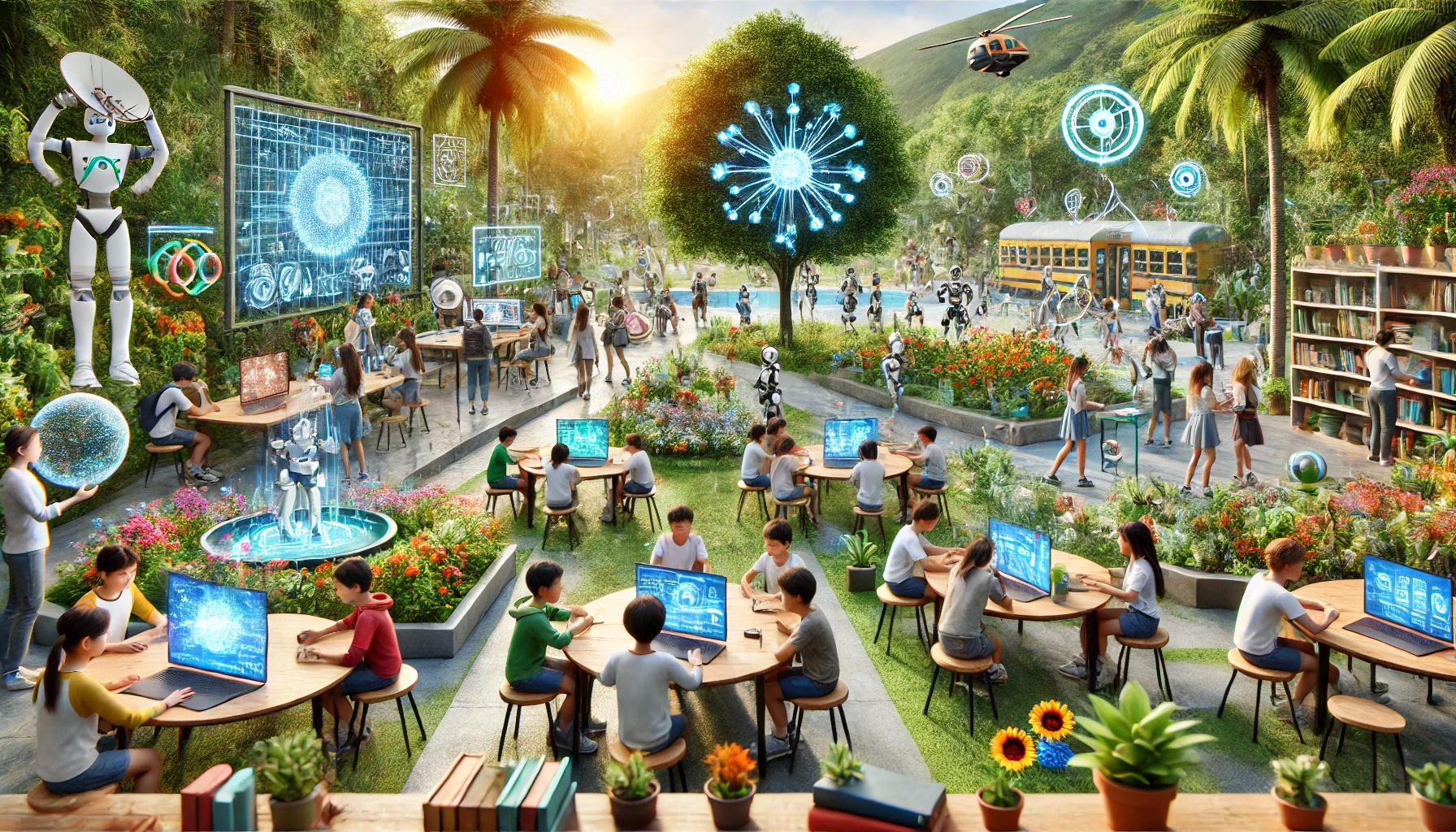
With AI finding information for us in seconds, why do we need to retain facts? Or better still, what facts do we need to retain and what skills do we need to develop? This is the question we need to ask. Some are. The problem is our education system is extremely bureaucratic and run by governments who often have no expertise. It responds extremely slowly to change. Change is now happening at lightning speed!
Besides the skills and knowledge we need to attain for success in our society, what experiences, skills and knowledge do we need to flourish as human beings? How do we build ourselves into strong, brave, resilient individuals with the necessary grit to face life’s challenges?
What could we be teaching consistently from the beginning? Not just one elective class in high school, but classes each year that teach:
Money/Finance class: not just one class, but classes each year starting from the beginning! Earth class: empowerment and understanding to make our earth healthy again Creativity Class Teaching, Learning and Mentoring/Apprenticeship class: right from the very beginning, learning how Critical Thinking class: not as part of something else, but how critical thinking works; every year of education World Cultures Class: this includes a knowledge of world religions: every year of schooling and not elective Great thinkers’ class: philosophy as a foundation for how to think and how cultures are formed Role Models Class: investigating outstanding human beings and how they’ve lived their lives Student driven subject class: put the learner in the driver’s seat Values and Ethics class: sorely needed in our world today. We must teach good values, ethics and morals The no curriculum class: a class where students shape the education they want The unlearn class; this is where we question what we’ve learned: is it true? Is it valuable? Has it made me a better person? The social justice class: a cause driven class Leadership class: how to lead in any role and how to support leadership How to get things done class: time management, goals, habits Invention class: creating new things: this is extremely relevant with the problems our society is facing right now Problem solving class: project based learning. Not just math, but real human challenges facing everyone The Art of Being Class: what does it mean to be a human being? How to build “self” class: the people we hang out with, the books we read, the music we play and more Mortality class: or perhaps: Life Span Class: what is death? Yes, let’s talk about that Beliefs Class: what do you believe? Why is it important? Food Class: where does food come from, preparing it, sitting and having a meal together Survival Class: grit and resilience to conquer or walk around life’s problems The Great Teachers Class: who are the great masters? What wisdom did they leave us? Performance and conquering fear class Personal Development Class Peace Class Quiet Class (Meditation, Mindfulness etc.) History: there is a huge focus on national history, but little else. How about that has repeated itself class? Self-care class: How to look after my body class: understanding physiology Sexuality class (every year of schooling) Human behavior class: psychology The class on what we don’t know. The class on building a social movement: empowering the people The class on global policy and politics The class on diversity, equity and inclusion The class on reconciliation: what does it mean? How can it be part of every day living? Outdoor nature class Personal Finance Class including investing The doing nothing class: naps, meditation, wasting time, sleep, unprogrammed time, how to observe and be present: The mandala class: The doodling class The collaboration class: How to collaborate The walking class (walks help the brain to think, notice, be creative, practice meditation, help the brain process ideas and much more). This would also include expedition learning outside of the classroom (what do we have to sit at desks to learn?
These are just a few ideas to spur some thought about things other than math scores and literacy. The arts are critical to our development personally and our development as a society. They need to be in every school “deluxe”. That means classes in dance, visual arts, theatre, music, and much more. Every year for every child!
Let’s work together to incubate a new education experience. One that liberates young people to be their best selves and at the same time, benefit society.
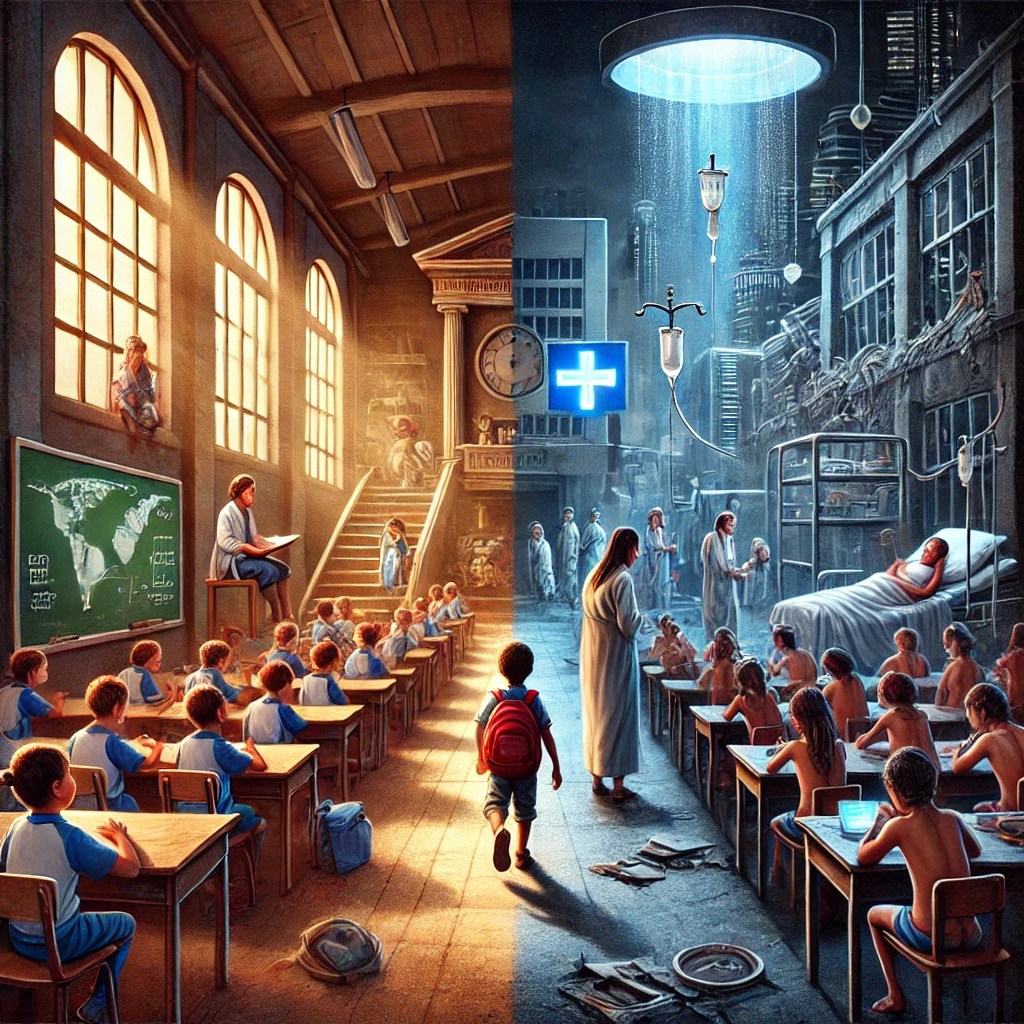
I’m not sure I need to advocate for increased funding to Canada’s Health Care Systems. Most Canadians would agree that the systems are on life support. This is in large part due to the underfunding of these systems and sneaky conservative governments that would like to privatize them. If you make a system look dysfunctional and then offer privatization….well, many uneducated wouldn’t understand what is happening, right?
Yes, there might be some waste in the system and we need to continually work towards efficiency to leverage more money for care, but we are doing a very poor job overall. Shortages of doctors and wait times for procedures and specialist are just a few of the problems. We also don’t cover many procedures and need to have a national dental and drug program for all.
One thing I’d like to point out is that many Canadians don’t understand taxes and healthcare. Many Canadians talk about wanting to pay less taxes and have no clue what that does to healthcare and education. Less funding also guts Canadian Social Programs like Canada Pension Plan, Old Age Security, Employment Insurance, Canada Child Benefit, Canada Workers Benefit, Social Housing and Rent Assistance, Disability Benefits, Indigenous Support Programs, Student Financial Assistance, Food Assistance and Community Support, Higher Education and more. In progressive countries France, Denmark, Sweden, Germany, Norway, Finland, Belgium, the Netherlands, Austria and so many more citizens are happy to pay taxes as they see the social benefits. These countries put roughly 25-30 percent of their GDP into these social safely systems. They get angry when cash is going under the table and people bypass paying taxes on this money. They understand how it is robbing the social safety systems. Canada only put 21 percent of our GDP into our social systems. Imagine how much better they would be every time we up that by one percent! The U.S.A. by contrast only puts 13.8 percent of their GDP into social safety systems. You don’t have to be a rocket scientist to see the results of inequity in that country!
On the education front, we have an extremely inequitable system of education. Its inequity is growing. Why do middle class parents want to send their kids to certain public schools, private schools or even schools, from the Catholic School Board? Because these schools have more. They have enriched programs, school trips, more extracurricular activities, more technology, more arts programs and often better teachers. How did we let this happen? Does our public even realize (especially the working classes), how they are getting screwed? That the future for their children is not the same as the children from middle class families in “richer schools”. It’s shameful.
I believe that a Canadian value is that of interdependence. We look after each other….well, mostly. Or at least we have believed in interdependence, otherwise we wouldn’t have these social programs. The concern today is the influence of those who believe that they would be ok without the social programs and that they can just pay for what they need out of their own pocket with little concern about others. This attitude is often permeating from our southern neighbours. Another interesting attitude is that some Canadians think that they should pay less taxes and still have all of the social safety systems. Where do they think the money comes from to run them?
I hope that the contrast in our media of the U.S.A. versus Canada is enough for most to understand the value of fighting for and improving our social safety infrastructure. Don’t let our governments erode it. Advocate for more spending to make sure they are equitable and serve the needs of our population. Be against the privatization of education and healthcare.
Get angry. Speak out. Use your voting power and learn more about these issues. The future of our children’s world is investments in social systems. A world where we believe in looking after our fellow man. A world where we don’t leave our people on the streets to suffer and die
It’s so difficult to speak to audiences about the value of music education and music making. In Canadian culture and many others around the world, we start out with the added value of music outside of the value of music itself. We have to justify music making because research shows that it has the following benefits:
Improved physical health including eye-hand/body coordination Improved emotional health Improved cognitive health Improved literacy Increased social inclusion and cohesion Calming the mind-body Improved focus Improved learning and retention
Of course, clinical trial studies are finding all of this to be true. Governments, educators and citizens will nod at this information, but still not put the resources in place to facilitate good music education. We think we’re making headway by spouting these facts, but they continue to fall on deaf ears. Music education is eroding in our country. It’s not considered by the powers-that-be as valuable as STEM subjects even though scientists are saying it’s at least equally important and some say more important!
We’re in a conundrum. Until everyone has the experience to learn and play music, it will be undervalued. If a child picks up a violin today, they will likely support an orchestra later in life. “I did that” is the most important element for engagement, understanding and equity of the value of a great music education. We can’t afford an “us and them” situation for any aspect of education. Just look south of our border and see what that leads to. We need equity in our education system with a rich, arts infused education including music! Our future depends on the creative entrepreneur who can help solve problems, create beauty and help us all experience the joy of living. The arts give that joy, but they also help us to create things like solutions to homelessness, solutions to our climate and ecological crisis, solutions to help us work together in peace on this planet.
I encourage everyone in our country to protest the inequities in our schools. Inequities that include the lack of strong music and arts education. Some schools have everything (orchestras, choirs, dance, drama, art classes), some schools have little to nothing. This is not the Canadian way.
If we do for one, we should do for all. When we do for all, our entire society will thrive!
We live in a time of technology and electronics. There are so many benefits to technological innovation and so many downsides as well. You probably have read a book in electronic format by now (or at least some part of one) and also read a traditional paper book. The digital text and screen is convenient and space saving. It might also be environmentally friendly (although there are debates about the ecological imprint of an electronic device, its manufacturing footprint on the environment and how often it needs to be replaced and recycled. There’s also the issue of the screen time and what this is doing to our bodies and minds. Real books save your eyes, don’t emit radiation and look great in a library:)
Enter the piano. Digital pianos abound. You can by the cheap partial keyboard piano online or in stores in many places. You could by a full keyboard/electronic piano at places like Costco fairly cheaply. You could also invest in cutting edge technology with a Yamaha digital piano (there are many different kinds including ones that have real actions in them).
When it comes to real pianos (I mean the acoustic kind made of wood, metal, real strings etc.), there are so many options. You can by some pretty cheap ones being produced in places like China (even Yamaha has entry level upright pianos and grands that are not great quality). You can also spend hundreds of thousands of dollars on brands like Bösendorfer or Fazioli.
How does one make a decision about the right piano for your personal needs? First off, quality is everything. Buy the best and the biggest (with acoustic upright and grand pianos) you can afford. Why? You could argue that “my son/daughter is just starting out, so we’re going to buy a less quality/expensive piano”. This is a fundamental mistake. Every note you play, how the keyboard feels and how the sound forms, sets the human response. If the sound is artificial (electronic sampling) and poor quality, there will be a huge negative impact on the human response to the music. If the strings are really short in length, they will not produce great sound. The longer the strings, the better the sound quality. That’s why there are such things as concert grands on stages of concert venues around the world. If you buy cheap, you are setting up the possibility of failed interest in music.
I’m a bit of a purist when it comes to electronic instruments. They are convenient for moving around and not needing tuning. You can also often sample many different types of sounds like harpsichord and organ. When in a pinch, I’ve practiced on these myself. I’ve even travelled with them when on tour, practicing in the hotel room with headphones on. If you buy one of these instruments, be sure to get the best quality you can afford: the sampling of sounds and keyboard weighting will sound and feel more like a real piano. These instruments are often very convenient if you live in an apartment. Yamaha has a technology that can be installed in acoustic pianos that allows one to switch from acoustic to digital, so you can have the best of both worlds. It’s called the Diskclavier.
Much of the music written since the late 18th century for keyboard was written for a real acoustic piano. I highly recommend the purchase of an acoustic instrument over top of the digital ones. The ability to blend/mix sound cannot be matched by an electronic piano. Like a real book, your body’s response to the sounds and music created by a real piano will be different than an electronic digital instrument. The piano is a a magnificent invention that so many composers loved and continue to love today. Do some research and find a wonderful acoustic instrument if you can make that work for you. The brands I recommend are Yamaha (high quality and stand up in multiple climate zones), Bösendorfer, Steinway, Fazioli (if you can afford one of these, I’ll be right over to play it for you!), Kawai, Bechstein, Schimmel, Steingraeber & Söhne, Grotrian-Steinweg, and Sauter.
You can purchase a used piano, but remember, pianos are like cars, they don’t age that well. Don’t buy an old piano unless it’s been completely reconditioned with new hammers, new strings and other important replacements. Even with a complete makeover, the quality might not be that great as the sound board has likely lost its crown (this is the wood under the strings). Do some research and learn as much as you can about pianos before you buy one!
Ranking systems for education are extremely flawed and myopic. For example, the U.S. World and News report ranks Canada in the top five countries for education. But what does this mean? If you ask students about schooling in Canada, most will not be happy with the system. They often talk about short-term memory and forgetting everything after tests. They also are exasperated about the extensive and intensive testing including standardized tests. Most don’t see the point of the curriculum and delivery. Even teachers are fed-up with the system where they often feel they can’t be creative in their teaching. I’ve done hundreds of interviews with teachers and students to determine this conclusion. Perhaps you have your own stories.
A growing gap in enriched education is happening. Many schools don’t have arts or music programs. Some schools have everything. Often this is related to class and wealth gaps. Some school districts have public schools for the arts where a limited amount of students can attend by audition. So many are turned away. A good example of this is Pearson School for the Arts in London Ontario. Why should one school be an arts school and the rest not have that branding. Research is showing that every child will benefit greatly from an arts education and that it is fundamental to having the ability to create anything in life. Neuroscientists as Stanford and many other Universities have research to prove this.
We can’t go on measuring education by test scores. We must measure it by well-being and grit. How engaged are students in learning for the sake of the benefits to their lives? I’m not talking about the corporate job, I’m talking about building who we are as human beings (not human doings) and being able to flourish in our world. We need a moral reconning as a society! What values should we use when measuring education and our lives in general? In places like Finland (the happiest country in the world for the seventh year in a row), they focus on the well-being of the student. They don’t test in the first seven years of education as they trust their teachers to know how the students are doing and what they need to succeed. Education is also free to the PhD!
Education equity is one of the major footprints leading to our social ailments. People are slipping through the cracks and ending up on our streets in large part because of our education inequity. Let’s strive to correct this. At a time when we need to re-brand our country, let’s make education our number one investment!
There’s a lot of research happening around achievement. One of the most illuminating discoveries so far is that achievement doesn’t make us happy. Once we achieve a goal, research is showing that there is a brief period of elation often followed by a long period of depression. Perhaps you’ve heard the expression “it’s about the journey”. Well, it really is. That’s not to say that achieving goals isn’t good for our well-being. It is a major footprint in Martin Seligman’s model for well-being. Research is showing that it’s about how we contextualize achievement as a marker along the way of our life-journey.
What about motivation? I certainly grew up thinking that motivation was going to lead to success and happiness. This is now being disproven. It’s actually daily habits that make us achieve and grow. I highly recommend reading James Clear’s book called “Atomic Habits” to learn more about how to develop habits and the role they play in our life-goals and our sense of fullfillment.
Here’s a brief TED talk about goals and happiness that helps illustrate what I’m talking about:
Classical music has a strong tradition of passing legacy for interpretation. Overtly, this includes teaching in a way that involves a fixed mind set. Teachers often present fingering, dynamics, tempos, voicing, emotional canvas through a lens that is inflexible. Most of us who play classical music come from this tradition, but it is slowly changing with each new generation.
It’s so important to realize that there are many truths. That’s not to say that there aren’t stylistic parameters to adhere to, but as Chick Corea once said to me: “Classical Musicians take themselves too seriously”, meaning that they are rigid in their view of the gods of music. The composer is like a god to many and what they have left behind is like the holy text that needs to be adhered to. This become quite a complicated mind-set when tackling composers like Chopin and Bach who left us variants in their musical texts, often including different notes, ornaments, pedal markings and many other details. How can there then be one truth.
This mind-set is further exacerbated by the “Conservatory” who puts metronome and interpretive markings where they never existed in the original texts. Conservatories also often produce recordings that set an expectation for interpretation. I actually have a friend who is a famous Canadian violinist who was asked to record an entire grade of music for a Conservatory. He’s super famous internationally as a great musician, but was told to adhere to the metronome markings the Conservatory had added to many of the pieces.
When we’re younger, we need models, so having clear instructions to imitate is a helpful framework to build a foundation. There also needs to be a clear pathway to encouraging students to interpret themselves so that they can become artists. Here’s hoping that the classical music lineage continues to promote some free expression so that everyone has the potential for artistry and not just imitation.
As a musician, I often get wrapped up into my work to the point where I’ve done nothing else all day. In the short term, I get a lot done.
It’s important to remember that in order to have some insight and ability to interpret and write music, we all need social connections. We need to live; not isolated, but amongst real people face-to-face. As physical health, emotional health, mental health and many more facets of our health are so important, social health is often neglected. Send a note, reach out to a family member, have coffee with a friend, get out and be with people and interact with them. Your music with thrive as a result. You will feel whole
I highly recommend the TED talk by Kasley Killam on this subject

 Clark Bryan